Hawaii Dog Registration Information
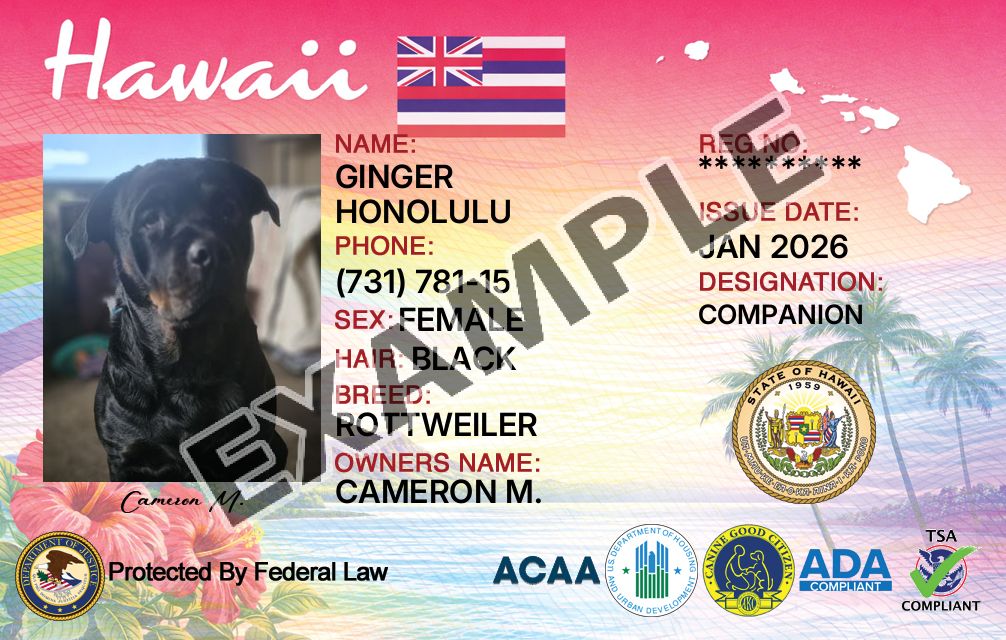
State Licensed, Service Dogs and Emotional Support Dogs in Hawaii
If you’re searching where do I register my dog in Hawaii for my service dog or emotional support dog, the key thing to know is this: Hawaii does not have a single statewide “service dog registration” or “ESA registration” system. Instead, most residents register their dog through a local county dog licensing process (your dog license in Hawaii), while a dog’s service-dog status is defined by disability law—not by a purchased certificate or online registry.
Where to Register or License Your Dog in Hawaii
Because licensing is handled locally, the right place to start depends on the island/county where you live (or where your dog primarily resides). Below are example official or county-contracted offices commonly involved with animal control dog license Hawaii questions and licensing intake. If a detail (like hours) is not published in an official source, it’s intentionally left blank.
Hawaiʻi County (Island of Hawaiʻi) — Vehicle Registration & Licensing Division (Dog Licensing Mail-In)
| Office name | Vehicle Registration & Licensing Division (Attention: Administration) |
|---|---|
| Street address | 101 Pauahi Street, Suite 5 |
| City / State / ZIP | Hilo, HI 96720 |
| Phone | (808) 961-8413 |
| Not listed in official source | |
| Office hours | Not listed in official source |
Note: Hawaiʻi County dog licensing information is published as a county process with mail-in requests handled through the VRL Division. (Address and phone sourced from publicly posted licensing instructions.)
County of Maui (Maui, Molokaʻi, Lānaʻi) — Maui Humane Society (Dog Registration & Licenses Intake)
| Office name | Maui Humane Society (Dog Registration & Licenses) |
|---|---|
| Street address | Not listed on the county page (location described as “Mokulele Highway at the Kamehameha Loop Intersection”) |
| City / State / ZIP | Not listed on the county page |
| Mailing address | P.O. Box 1047, Puunene, HI 96784 |
| Phone | (808) 877-3680 |
| Not listed on the county page | |
| Office hours | Not listed on the county page |
Note: Maui County’s official guidance states dog registration is done at the Maui Humane Society and provides the mailing address and phone number.
County of Kauaʻi — Kauaʻi Humane Society (County Animal Control & Licensing)
| Office name | Kauaʻi Humane Society |
|---|---|
| Street address | 3-825 Kaumualii Highway |
| City / State / ZIP | Lihue, HI 96766 |
| Phone | (808) 632-0610 |
| customerservice@kauaihumane.org | |
| Office hours | Public hours: Friday–Wednesday 10:00 a.m.–6:00 p.m.; Closed Thursdays |
| Animal Control Dispatch (non-emergency) | (808) 632-0610 ext. 105 |
| Animal Control Dispatch email | dispatch@kauaihumane.org |
Note: Kauaʻi Humane Society describes its animal control services (including licensing) as a service of the County of Kauaʻi and publishes public hours, phone, and email contacts.
State of Hawaiʻi (Rabies Prevention / Import Rules) — Animal Quarantine Branch
This is not the office that issues your local dog license, but it is a primary state agency responsible for protecting Hawaiʻi’s rabies-free status and enforcing animal quarantine/import requirements.
| Office name | Animal Industry Division — Animal Quarantine Branch (Animal Quarantine Station) |
|---|---|
| Street address | Not listed in the referenced official contact source |
| Phone | (808) 483-7151 |
| rabiesfree@hawaii.gov | |
| Office hours | Not listed in the referenced official contact source |
Tip: If you’re moving to Hawaiʻi from the mainland with any dog (including a service dog), quarantine/import compliance is a separate step from local licensing.
Overview of Dog Licensing in Hawaii
What “registering your dog” usually means
In most cases, where to register a dog in Hawaii means obtaining or renewing a county-issued dog license tag. A license connects your dog to you (owner name and address), helps animal control identify a found dog, and supports local enforcement of rules like leash laws and vaccination requirements.
Hawaii is rabies-free—why vaccination paperwork still matters
Hawaiʻi is widely recognized for maintaining a rabies-free status, and the state enforces strict animal import/quarantine rules to prevent rabies introduction. Even though local licensing rules vary by county, many licensing applications rely on current rabies vaccination documentation or veterinary records as part of responsible pet ownership and public health practice—especially for dogs arriving from outside Hawaiʻi.
Dog license vs. service dog vs. emotional support animal (ESA)
These are three different concepts that get mixed up online:
- Dog license in Hawaii: A local/county registration (usually a tag) tied to ownership and local animal rules.
- Service dog legal status: Based on disability law and training to perform tasks for a person with a disability—not on a state registry or paid certificate.
- Emotional support animal rules: ESAs generally do not have public-access rights like service dogs; they are most commonly addressed in housing contexts.
How Dog Licensing Works Locally in Hawaii
Step 1: Identify your county, then use that county’s process
Hawaiʻi dog licensing is typically managed at the county level. That’s why “animal control dog license Hawaii” searches often lead to different answers depending on whether you live on Oʻahu (Honolulu), Hawaiʻi Island, Maui, or Kauaʻi. Start by choosing the office that matches the county where your dog lives most of the time, then follow that county’s application or renewal workflow.
Step 2: Prepare the basic info most offices ask for
While each county can set its own requirements, many licensing applications ask for:
- Owner contact details (name, address, phone)
- Dog details (name, breed, color, age, sex)
- Rabies vaccination proof or veterinary records (commonly requested)
- Spay/neuter verification (often affects the fee)
Step 3: Understand license duration, renewal timing, and fees
License terms and renewal windows are set locally. For example, some county processes describe a biennial license term and may provide a renewal window before expiration. Fees can differ based on whether a dog is spayed/neutered and whether supporting veterinary certification is provided.
If you have a service dog or ESA, do you still license the dog?
In most places, a service dog or emotional support animal can still be subject to local licensing rules (like any other dog). The difference is that service dog status is about legal access rights and accommodations, while licensing is about local animal regulation. If you believe you qualify for a fee exemption (some jurisdictions offer reduced fees), ask the licensing office what documentation they accept—without assuming there is a “service dog registration card” requirement.
Service Dog Laws in Hawaii
Service dogs are defined by function and training, not by registration
A true service dog is generally a dog that is trained to do specific work or perform tasks for a person with a disability. The legal focus is on the dog’s trained tasks and behavior in public—not on an online “certification,” vest purchase, or paid registry listing.
What you can expect when accessing public places
Many public-facing rules revolve around whether the dog is under control and housebroken. Businesses and staff may have limited, legally permitted questions in some circumstances, but they typically cannot require you to show a “service dog registration” card as proof.
Service dog status does not replace local licensing
Even when a dog is a service dog, the county may still require a dog license in Hawaii for dogs residing in that county. Think of these as parallel systems:
- County licensing: ownership + animal control compliance
- Service dog law: disability accommodation + trained tasks
Emotional Support Animal Rules in Hawaii
ESAs are not the same as service dogs
An emotional support animal (ESA) provides comfort by its presence, but ESAs are generally not trained to perform disability-related tasks in the way service dogs are. Because of that, ESAs usually do not have the same public-access rights as service dogs.
Where ESA documentation is commonly used
ESA requests most often come up in housing contexts, where a person may request a reasonable accommodation. That process is separate from local dog licensing; even with ESA documentation, you typically still must follow county rules for licensing and vaccination.
Avoid “ESA registration websites” for licensing purposes
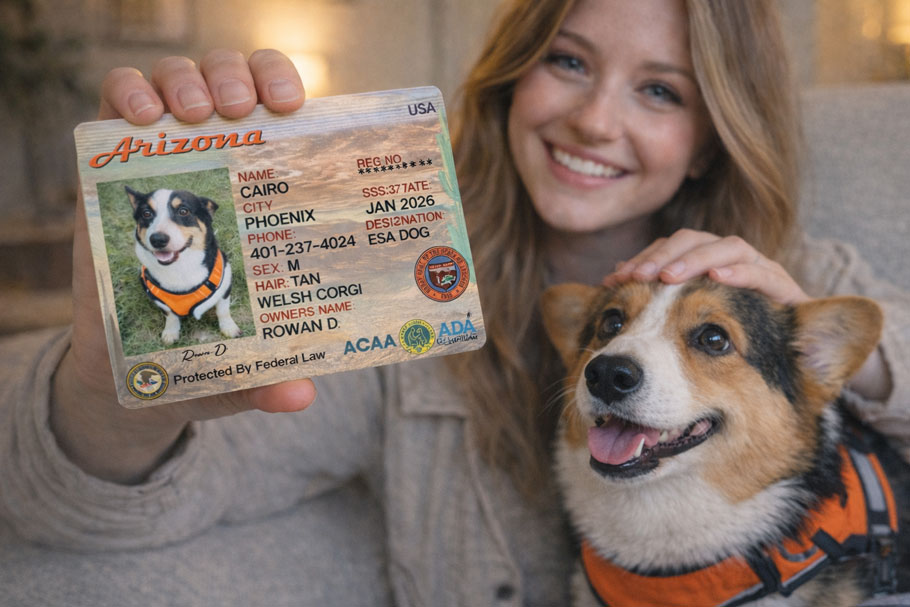
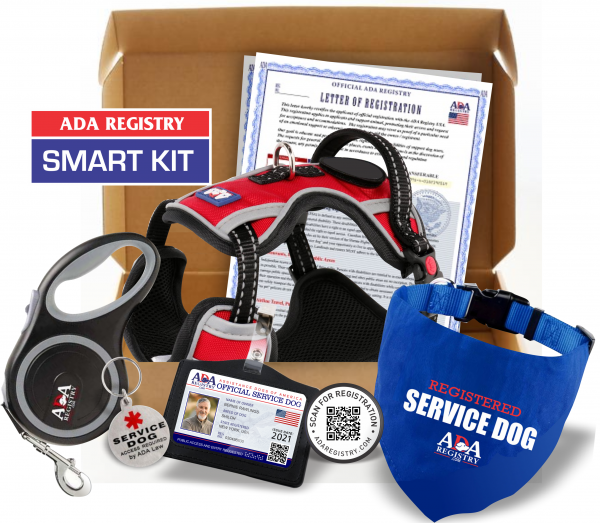
If your goal is where to register a dog in Hawaii, third-party “registration” sites generally do not substitute for county licensing. The safest approach is to work directly with the official county office or county-contracted animal services organization that issues the local dog license tag.
Frequently Asked Questions
Do I need a special registration for a service dog in Hawaii?
Usually, no. Service dogs are recognized based on disability law and the dog’s training to perform tasks. However, your county may still require a standard dog license tag like any other dog.
Where do I register my dog in Hawaii if I just moved?
Start with your county’s licensing office (or county-contracted animal services). If you moved from outside Hawaiʻi, also review state import/quarantine requirements because those are separate from local licensing.
Is rabies vaccination required in Hawaii?
Hawaiʻi is rabies-free and strictly regulates animal import/quarantine to keep it that way. Many county licensing workflows also rely on vaccination/veterinary documentation as part of responsible dog ownership and enforcement practices. If you’re arriving from out of state, the state’s animal quarantine process is especially important.
Is a dog license the same thing as microchipping?
No. A dog license is a county registration/tag tied to local rules. Microchipping is a permanent ID method stored in a chip database. Many owners do both.
What if I’m on Hawaiʻi Island and need both animal control and licensing help?
Licensing and animal control can involve different offices. For Hawaiʻi County, licensing guidance is commonly routed through the county’s licensing/finance function, while animal control services may be handled through local law enforcement channels depending on the issue.
How do I avoid scams when searching “service dog registration” online?
Use official county offices for your local dog license in Hawaii, and rely on disability law (not paid certificates) to understand service dog status. If someone is selling a “required registry,” treat that as a red flag for licensing purposes.
Register A Dog In Other Hawaii Counties
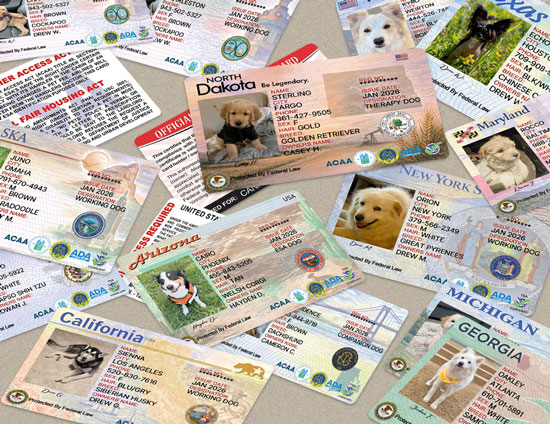
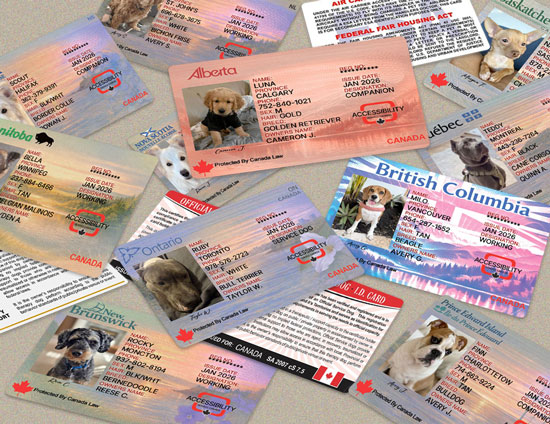
Select your county from the dropdown below to get started with your dog’s ID card. Requirements and license designs may vary by county, so choose your location to see the correct options and complete your pup’s registration.